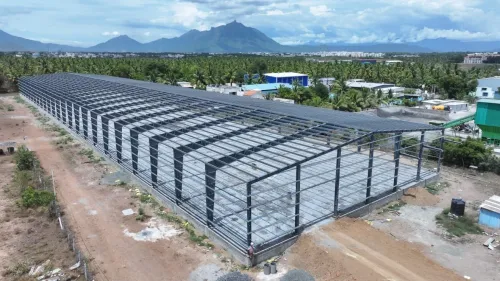
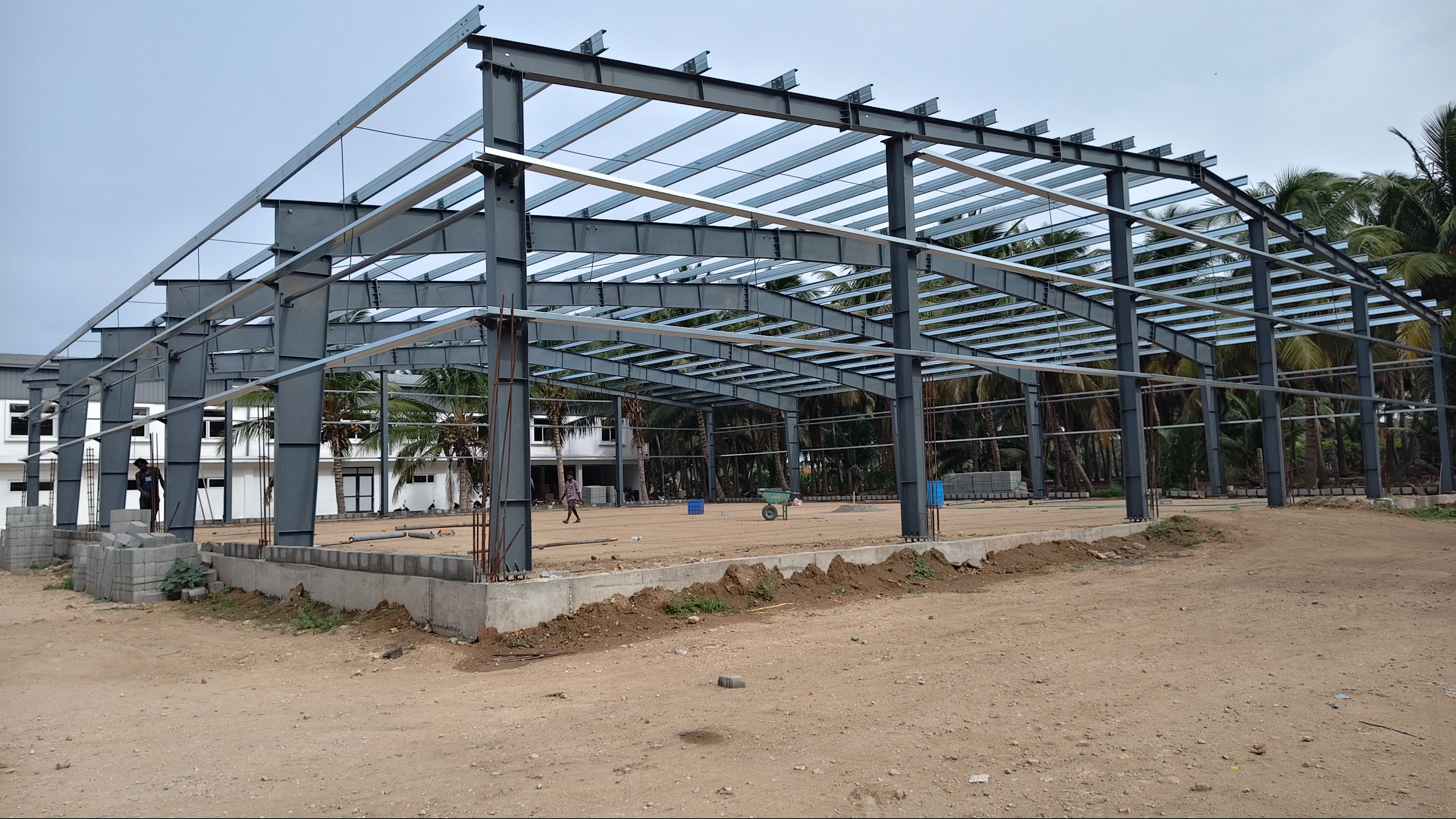
PEB Architectural Design has become increasingly important as steel buildings move beyond basic factory sheds. Corporate manufacturing facilities, warehouses, commercial buildings, showrooms, and industrial campuses are often expected to perform efficiently while also presenting a professional architectural identity.
The challenge is to achieve that appearance without creating unnecessary structural complexity.
Begin With Function, Not the Façade
Architecture should respond to how the building works.
A factory façade may need to accommodate offices, staff entrances, vehicle access, ventilation, utility areas, and production zones. Designing an attractive elevation without understanding these functions can create conflicts later.
The structural grid and operational layout should therefore be coordinated with the architectural concept from the beginning.
Use Proportion to Improve Appearance
A PEB building does not need elaborate shapes to look well designed.
Good proportion can make a significant difference.
Architects can work with:
- Building height
- Roof profile
- Entrance scale
- Horizontal and vertical façade divisions
- Canopies
- Glazing
- Cladding orientation
- Material transitions
These elements can create visual structure without unnecessarily complicating the primary framing.
Combine Materials Carefully
Industrial façades increasingly combine metal cladding with glazing, masonry, architectural panels, louvers, or other finishes.
The important issue is not how many materials are used but how their interfaces are detailed.
Waterproofing, support systems, thermal movement, maintenance access, and connection details should all be coordinated.
A visually attractive façade that repeatedly develops leakage or maintenance problems is not successful architecture.
Give Entrances a Clear Identity
Many industrial buildings benefit from distinguishing the administrative entrance from the production or logistics areas.
A canopy, glazed lobby, vertical architectural feature, or change in cladding can create a recognizable arrival point without redesigning the entire structure.
This can be particularly useful for manufacturing companies in Coimbatore that receive customers, vendors, auditors, consultants, and business partners at their facilities.
Coordinate Windows and Daylight
Natural light can improve the quality of some industrial and commercial interiors, but glazing and translucent roofing should be used according to building requirements.
Heat gain, glare, waterproofing, maintenance, and internal operations need consideration.
The objective should be useful daylight rather than adding transparent areas solely for appearance.
Hide Services Through Early Coordination
External pipes, ducts, cables, rainwater systems, and equipment can significantly affect the final elevation.
When architects, structural engineers, and service consultants coordinate early, these elements can be integrated more effectively.
Waiting until construction is nearly complete often results in services being routed wherever space remains.
Avoid Unnecessary Structural Complexity
A dramatic façade can sometimes be achieved through secondary architectural elements instead of changing the main structural system.
This distinction matters because complicated primary geometry can influence engineering, fabrication, erection, and cost.
Good PEB architecture seeks a balance between visual identity and structural logic.
Think About Expansion
If a factory may expand, the architectural concept should anticipate how a future extension will connect visually with the original building.
Otherwise, an attractive first phase can become visually fragmented when additional bays are constructed.
SAHARA STRUCTURES combines PEB and steel-building capabilities with architectural design considerations for industrial and commercial projects in Coimbatore and Tamil Nadu.
A well-designed PEB facility does not have to look temporary or generic. With coordinated proportions, materials, entrances, services, daylight, and structural planning, industrial architecture can remain functional while presenting a strong and professional identity.
Keywords